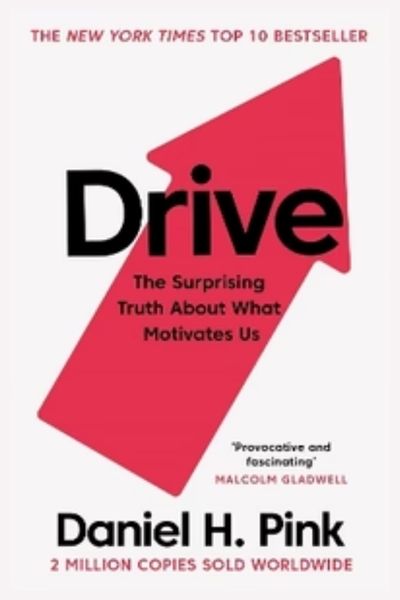


Last month, I read Drive by Daniel H. Pink on a friend’s recommendation — and I haven’t stopped thinking about it since. It’s one of those books that doesn’t just give you theory; it makes you rethink how you lead, work, and even parent.
At its core, Drive explores what truly motivates us — and why the old models of rewards and punishments are no longer enough.
The Three Eras of Motivation
Pink lays out a progression:
- Motivation 1.0: Survival — eat, stay alive.
- Motivation 2.0: External carrots and sticks — rewards and punishment.
- Motivation 3.0: Inherent satisfaction — driven by autonomy, mastery, and purpose.
Most modern workplaces still run on Motivation 2.0 — but for creative, non-routine work (especially in tech, product, design, or problem-solving roles), it often backfires.
Instead of control, Drive argues we need:
- Autonomy → Freedom within boundaries.
- Mastery → The chance to grow through challenge.
- Purpose → Feeling like the work matters.
The Goldilocks Task: Where Flow Happens
One idea I loved was the Goldilocks Task — giving someone a challenge that’s not too hard, not too easy, but just right. That’s where flow lives. Not only does this create motivation, but it’s also where some of the best work happens — when people are stretched just enough to be fully engaged without being overwhelmed.
This is something leaders can apply today. Instead of delegating tasks based only on bandwidth or job title, think: Is this the right level of challenge for this person right now?

Feedback Isn’t a Burden — It’s a Compass
Another insight that really stuck with me: the power of immediate feedback.
In corporate settings, feedback is often viewed as negative, time-consuming, or something reserved for yearly performance reviews (cue the hours writing reports no one reads again). But Pink reframes feedback as something that can be quick, positive, and course-corrective.
In fast-moving environments, we don’t have time for delayed feedback loops. Short, encouraging inputs — “this was clever,” “watch out for X,” or “try it this way next time” — help people get better faster. It’s not about judgment, it’s about alignment and improvement.
We need to stop treating feedback as a scary event and start seeing it as a habit.
Autonomy vs. Red Tape
Reading Drive made me reflect on how red tape had unintentionally limited my team’s autonomy in the past. I’ve seen firsthand how creativity dies when people are stuck in rigid frameworks and approval chains. Yet so much of it comes from a fear of letting go.
Pink challenges that old-school thinking — the need to “see” someone at their desk from 9 to 5 to trust they’re working. In reality, freedom within boundaries invites responsibility. When people are given space to own their work, they usually rise to it — and they’re far more fulfilled.
Motivation in the Age of AI
With AI, vibe coding, and flexible work reshaping how we deliver value, the shift toward intrinsic motivation is more urgent than ever. We’re seeing people leave higher-paying roles for lower-paid jobs with more freedom. Why? Because autonomy, mastery, and purpose matter
Books like Deep Work, The Phoenix Project, and Thinking in Systems — which are next on my list — all touch on this same thread. Systems that foster flow and real engagement perform better. It’s not just a theory; it’s an operational edge.
The MBA Oath & Rethinking Leadership
One idea Pink references is the MBA Oath — a kind of professional code that goes beyond profits to include values like ethics, integrity, and purpose. It made me wonder: what if teams or departments took a similar approach? What if we made purpose and integrity just as important as KPIs?
Final Thoughts
Drive helped me name what I’ve long felt about work and leadership: that people aren’t just machines to be optimised. They want to feel challenged, trusted, and connected to something bigger than themselves.
This isn’t fluff — it’s a path to better results, healthier teams, and more sustainable growth.
Whether you’re a leader, parent, creator, or coder — this book is worth your time. It doesn’t just ask “How do we motivate people?” It asks: “What kind of world are we building with the way we work?”